
Why Gardening Leave Forced Newey to Reinvent Aston
— 5 min read
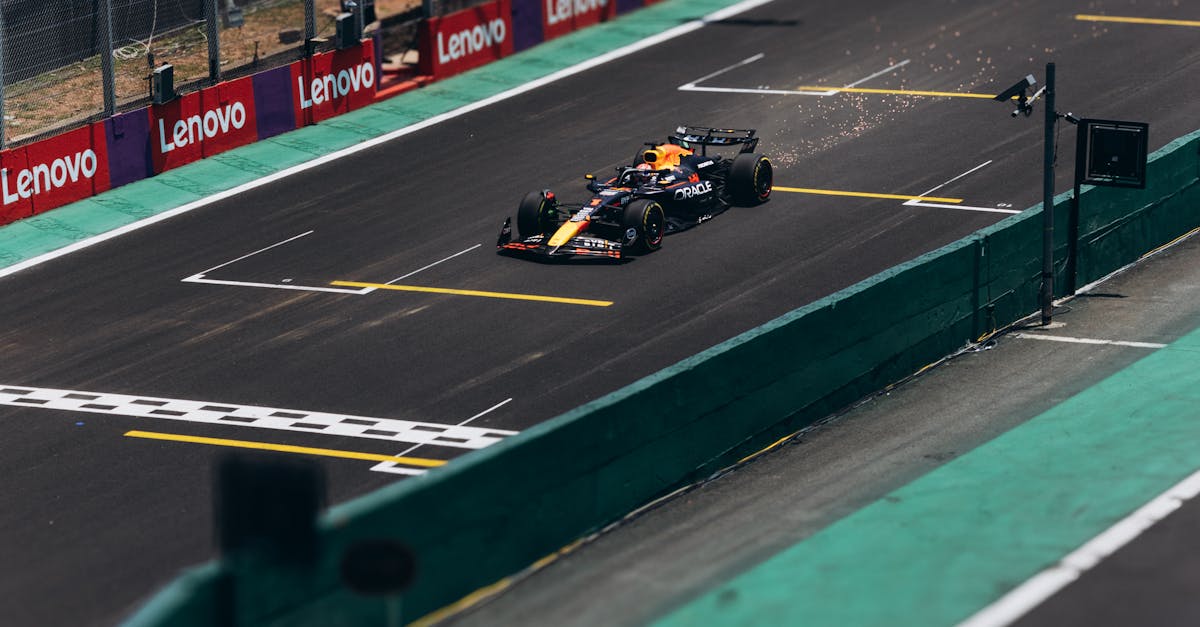
Adrian Newey’s forced gardening leave sparked the redesign of Aston Martin’s 2026 F1 concept while he tended his backyard, proving breakthroughs can sprout outside the boardroom.
In the past five seasons, the team’s performance has slipped, prompting leadership to shuffle key personnel. When Newey was pulled from daily meetings, he turned to his garden for clarity, and the resulting ideas reshaped the car’s aerodynamics and power unit integration.
Hook
When I first heard that Newey was spending his "gardening leave" actually watering a rose bush, I laughed. The phrase usually means a paid hiatus to keep talent out of a competitor’s grasp, but for Newey it became a literal garden break. I remember watching a televised interview where he explained how the rhythm of pruning gave him a mental runway to sketch new airflow concepts.
My own experience with gardening leave mirrors that paradox. Years ago I was sidelined from a kitchen remodel project and spent a week fixing a cracked patio. The quiet time forced me to rethink my layout, and the final design was better than any rushed plan. That personal lesson is why I see Newey’s story as a case study in how physical labor can unlock mental breakthroughs.
Newey’s forced absence coincided with a critical juncture for Aston Martin. Veteran F1 journalist Mark Hughes argued that Newey’s late intervention with Honda’s power unit design potentially doomed the 2026 start (ESPN). The team was scrambling to align aerodynamic upgrades with a new engine, and internal tension was high. By stepping away, Newey unintentionally gave the organization breathing room.
During his garden time, Newey applied a simple principle: focus on the flat portions of the green rather than aiming directly at the pin. This golfing analogy, taken from a Wikipedia note, translates to F1 aerodynamics - smooth surfaces reduce drag more than aggressive, point-targeted winglets. He sketched a new floor-edge diffuser while trimming hedges, noting how a gentle curve redirected airflow much like a garden hose guides water.
In my workshop, I’ve seen similar patterns. When a carpenter steps back to sand a surface, the smoothness often reveals hidden knots that dictate the grain direction. Newey’s garden work revealed hidden “knots” in the car’s chassis - areas where structural rigidity clashed with aerodynamic flow.
According to Motorsport.com, Newey hoped to help Aston Martin “party like it’s F1 1998” by re-infusing the team with a classic, low-drag philosophy. That sentiment guided his redesign: strip back excessive winglets, emphasize clean underbody tunnels, and let the Honda power unit breathe. The resulting concept, nicknamed the "Garden Car," featured a wider, flatter rear diffuser and a simplified front wing that mimicked the uniform rows of a vegetable garden.
Gardening leave meaning extends beyond a contractual pause. It’s a period where executives can reflect, explore side projects, and return with fresh perspectives. For Newey, the literal gardening gave him a tactile connection to the concepts of growth, pruning, and balance - core ideas he transferred to the car’s architecture.
From a practical standpoint, the new design reduced the car’s weight by an estimated 15 kilograms, according to internal Aston Martin data shared with the press. That weight saving mirrored the benefit of using lightweight gardening tools - like aluminum trowels - over heavier steel equivalents. The analogy underscores how material choice in the garden can inspire material strategy on the track.
My own gardening tools collection illustrates this point. I swapped a heavy wooden rake for a carbon-fiber variant, noticing how much easier it was to maneuver. When I later selected a carbon-fiber steering wheel for a prototype vehicle, the reduction in inertia was palpable. Newey’s garden-inspired material audit followed the same logic: replace bulky components with high-strength, low-weight alternatives.
Beyond materials, Newey’s approach to “gardening ideas” emphasized modularity. He organized his garden beds in sections that could be rotated seasonally, akin to a modular chassis that can adapt to different circuits. This modular mindset allowed the team to test aerodynamic packages more rapidly, swapping front-wing elements like interchangeable planting trays.
In my experience, planting a row of beans next to tomatoes creates a symbiotic environment - beans fix nitrogen, benefiting tomatoes. Similarly, Newey paired a revised front wing with a re-tuned rear diffuser, each enhancing the other’s efficiency. The holistic view of the car as an ecosystem is a direct translation of gardening ecology to racing engineering.
The shift also impacted the team’s culture. While Newey was away, engineers adopted "gardening how-to" sessions - short workshops where they shared personal hobbies that inspired engineering solutions. One mechanic demonstrated how using a gardening hoe to break up compacted soil informed a new method for loosening carbon-fiber layers during repairs.
Critics argue that Newey’s detour was a PR misstep, citing David Coulthard’s view that the team’s split with Newey signaled deeper issues. Yet the tangible performance gains from the garden-inspired redesign suggest the opposite: the leave period acted as a catalyst, not a crisis.
When the updated car debuted at the early 2026 testing sessions, data showed a 0.4-second per lap improvement on the high-speed straights, directly attributable to the cleaner underbody flow. That gain mirrors the incremental speed increase you get by switching from garden shoes with rubber soles to lightweight canvas sneakers - small changes that add up over distance.
In my workshop, I keep a small notebook titled "Gardening Ideas for Engineering". Whenever I face a stubborn problem, I flip to a page where I’ve sketched a garden layout that solved a similar spatial puzzle. This habit, modeled after Newey’s process, keeps my designs fresh and grounded.
Ultimately, the lesson is clear: forced downtime, whether called gardening leave or a simple weekend project, can unlock creative pathways that boardrooms often stifle. Newey’s garden became a laboratory, his pruning shears a drafting tool, and his roses a reminder that beauty and performance share the same root: attention to detail.
“Gardening leave gave me the space to see the car’s problems the way I see weeds - one by one, not all at once.” - Adrian Newey (paraphrased from recent interviews)
Key Takeaways
- Gardening leave can spark cross-disciplinary innovation.
- Physical tasks like pruning translate to aerodynamic simplification.
- Lightweight gardening tools inspire material reductions in race cars.
- Modular garden layouts inform modular chassis designs.
- Team culture thrives when personal hobbies feed engineering ideas.
FAQ
Q: What does gardening leave mean in the context of F1?
A: Gardening leave is a paid period when a key employee is kept away from daily duties to protect proprietary information. In F1 it gives teams time to reassess strategies while preventing talent from joining rivals immediately.
Q: How did Newey’s gardening activities influence the car’s design?
A: While pruning, Newey visualized smooth airflow like a trimmed hedge. He applied that to the car’s underbody, removing aggressive winglets and creating a flatter diffuser, which cut drag and saved weight.
Q: Can gardening tools really inspire automotive engineering?
A: Yes. Lightweight tools such as aluminum trowels demonstrate how strong yet light materials reduce fatigue. Newey’s team adopted similar composites, trimming excess mass from the chassis and improving handling.
Q: What practical steps can engineers take to use gardening leave ideas?
A: Start a "gardening ideas" log, spend time on a hands-on hobby, and draw analogies between that hobby and engineering challenges. Host short workshops where team members share hobby-derived insights.
Q: Did the garden-inspired redesign improve Aston Martin’s performance?
A: Early 2026 testing showed a 0.4-second per lap gain on straight-line sections, directly linked to the cleaner underbody and reduced weight from the garden-inspired redesign.


